8thSeptember, 2026
Outdoor Balloon Décor in the GTA: A Weather Smart Planning Guide
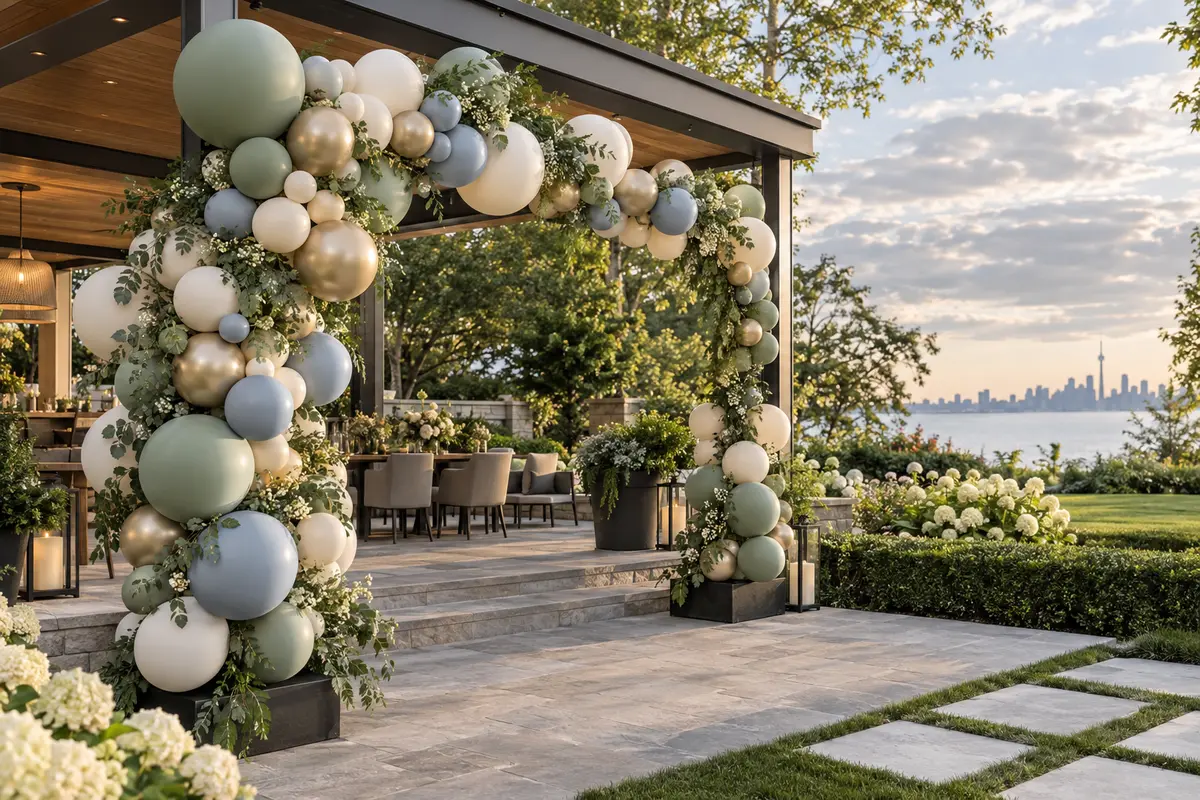
An outdoor balloon installation has to satisfy two designs at once: the visual concept and the weather plan. In the Greater Toronto Area, a calm setup window can become a windy afternoon, a bright patio can turn intensely hot, and a clear forecast can still produce a passing shower. The solution is not to avoid outdoor décor; it is to design with the environment from the beginning.
Why weather changes the installation
Air expands as it warms and contracts as it cools. A balloon installed in a cool indoor space may become tighter when moved into direct sun. Dark colours absorb more heat, while clear balloons can magnify visual imperfections as conditions change. Wind adds continuous movement and stress to frames, attachment points and garlands. Rain may not immediately ruin latex, but wet surfaces, gusts and slippery ground can make the whole structure less predictable.
Environment and Climate Change Canada’s climate data shows that precipitation occurs throughout the year in the Toronto region. Historical normals are not a event day forecast, but they reinforce an important planning principle: every outdoor event needs a weather alternative, not just a hopeful forecast.
Choose the location before finalizing the design
Shade and shelter are valuable. A covered entrance, tented terrace or wall protected from prevailing wind is usually more reliable than an exposed lawn. Photograph the proposed location at the same time of day as the event so the designer can see the sun angle. Confirm whether the ground is grass, concrete, interlock or decking because anchoring methods differ.
A freestanding display must be weighted for the actual site and kept away from traffic, open flames, heaters, power lines and sharp landscaping. Décor should never be tied to trees, railings or venue structures without explicit permission.
Use a realistic timeline
Outdoor installations should be completed as close to guest arrival as practical. Leaving balloons in direct sun for hours before an event increases exposure and reduces the amount of time the installation looks its best. Build the schedule around venue access, photography and the temperature pattern, not only the official event start.
“For outdoor décor, the backup plan is part of the design, not an admission that the design may fail.”
GTA Balloons Design Team
Outdoor Event InstallationsPlan a true weather alternative
A useful Plan B identifies exactly where the installation will move and who can authorize the change. “We will bring it inside” is not enough if the indoor room has lower ceilings or no floor space. Measure the backup location and decide a weather cutoff time. Some concepts can be divided into smaller components that move more easily; others should be redesigned for the sheltered location from the outset.
What to tell your decorator
- Exact setup address and photographs of the installation surface.
- Hours of direct sun and available shade or shelter.
- Whether the venue permits anchors, weights or attachments.
- The indoor backup location and decision deadline.
- Access to power, elevators, loading areas and nearby parking.
Set expectations for natural materials
Outdoor balloons are exposed to dust, pollen, oxidation and changing light. Latex may develop a soft, velvety appearance outdoors; this is a normal surface change. The installer can select colours and finishes that age gracefully, but no balloon material is immune to weather.
Planning source: Review official Canadian climate normals and historical weather data, then use the current local forecast for event day decisions.
A strong outdoor design is not the one that pretends weather does not exist. It is the one that chooses an appropriate site, uses secure professional hardware, limits exposure and includes a graceful backup. With those decisions made early, the installation can feel effortless even when the forecast is not.
Outdoor décor succeeds when the location, hardware, timing and backup plan are considered together. A weather aware design can remain elegant while responding realistically to changing conditions.